Children's dental care in Sector 93, Gurgaon
Calm, friendly checkups and treatment for children, from the first tooth to the early teens.
Medically reviewed by Dr. Arti Kumari, BDS on 15 October 2026. How we review
5.0 on Google from 190+ reviews
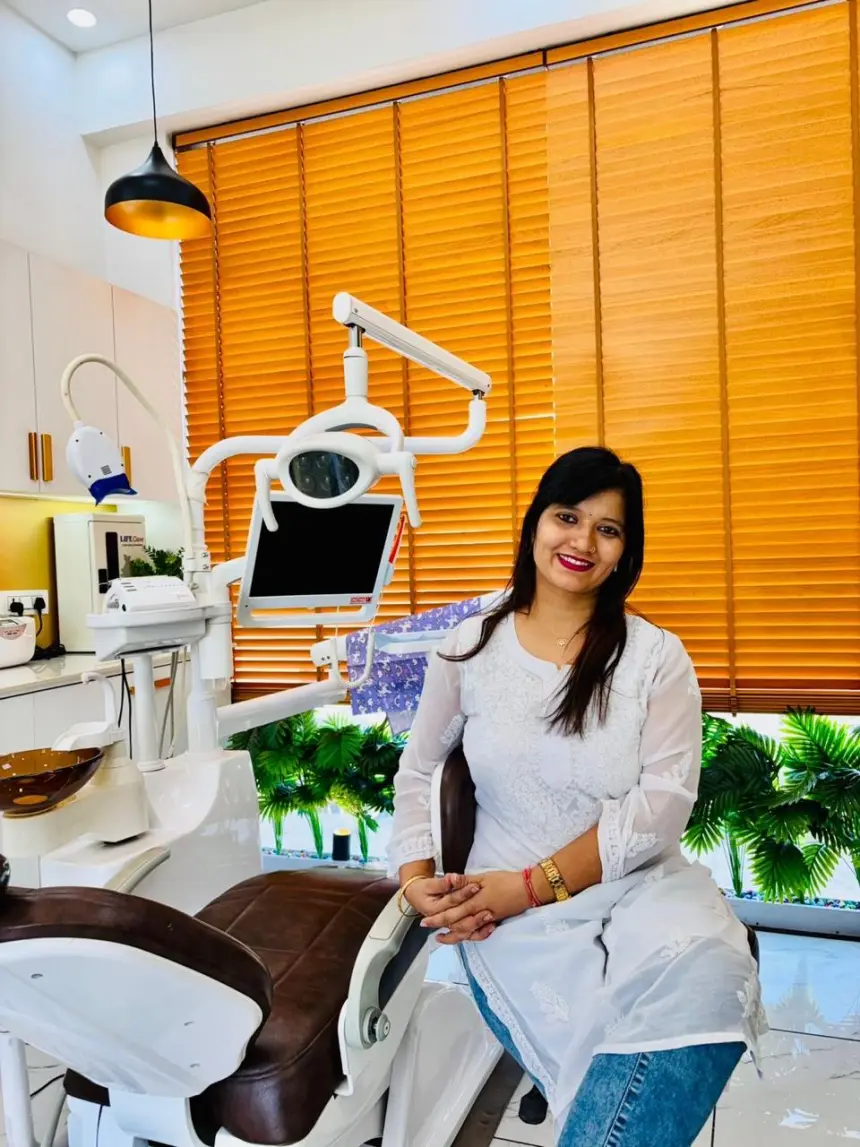
Many parents hear that milk teeth do not matter because they fall out anyway. In fact, they help children chew, speak clearly and hold space for the adult teeth growing underneath. A cavity in a milk tooth can cause pain, infection and missed school days. Regular checkups catch these problems early, when treatment is smaller and easier.
Dr. Arti Kumari, a dental surgeon, provides general dental care for children at Dantiki Dental Clinic, including checkups, fillings, extractions and preventive care. Parents in Google reviews describe her as patient with children, keeping them talking and calm during treatment. If your child needs specialist care, she will explain why and suggest a referral.
Patients come for kids dentist from Sectors 85 to 95, Hayatpur and the rest of New Gurgaon, and from the Dwarka Expressway sectors. The clinic is open every day, including Sunday mornings.
Information from Dantiki Dental Clinic and Implant Center, Sector 93, Gurgaon, reviewed by Dr. Arti Kumari on 15 October 2026. Your treatment plan is decided after an examination. Sources
When to bring your child in
First tooth or birthday
Book the first visit by age 1 or when the first teeth appear, whichever comes first.
White or brown spots
Chalky white or brown spots near the gums can be early signs of a cavity.
Toothache or gum swelling
Toothache, crying while eating or a pimple-like bump on the gum needs a prompt visit.
Thumb sucking after three
Thumb or finger sucking that continues beyond about age 3 can start to affect the front teeth and bite, so it is worth a check.
Alignment check at seven
Around age 7, crowding, crossbites or teeth sticking out can be checked while the jaw is still growing.
What happens at your child's visit
Meet
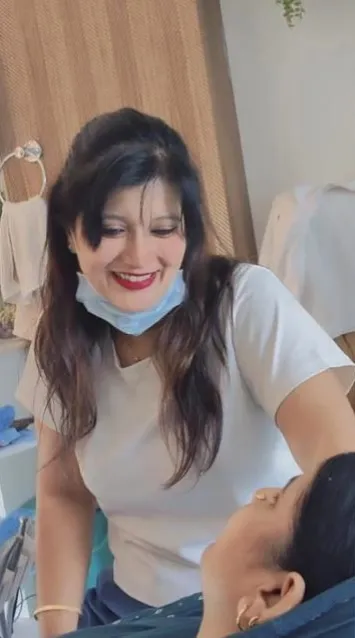
The first visit is kept short and relaxed. Young children can sit on a parent's lap during the check.
Check
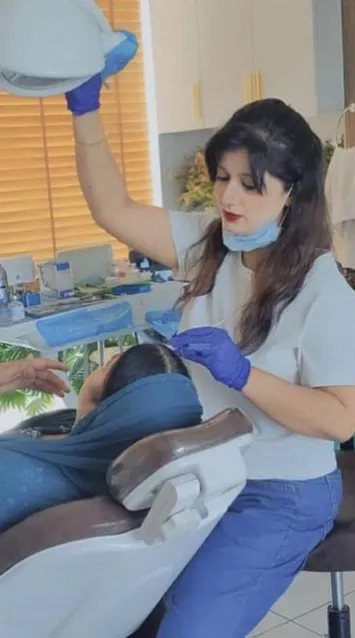
Teeth, gums and bite are checked. A digital X-ray is taken if needed, such as for a hidden cavity.
Clean
Plaque and stains are cleaned gently if needed, and you are shown where brushing is being missed.
Protect
Fluoride varnish, and sealants on the back teeth, may be suggested depending on your child's age and risk of cavities.
Guide
You get advice on brushing, sweets, bottle feeding and habits, plus a date for the next checkup.
How long is a visit, and how often?
A first visit or routine checkup is usually short, so young children do not get tired or restless. Many children are seen every six months, and Dr. Arti may suggest visits more or less often depending on your child's risk of cavities. A filling is usually done in one visit, but for a nervous child, treatment may be split into shorter visits so the child can build trust first.
What affects the cost of a child's treatment
The cost depends on what your child needs. A routine checkup is very different from treating several cavities. The exact estimate is shared after examination, before treatment starts, so you know what to expect.
- Checkup only or treatment needed
- Number of teeth involved
- Filling, nerve treatment or extraction
- Fluoride or sealants, if chosen
Caring for your child's teeth at home
- Brush twice a day, including last thing at night, with a toothpaste that contains fluoride: a rice-grain smear under age 3 and a pea-sized amount from 3 to 6. Help your child spit out the toothpaste after brushing, without rinsing with water.
- Help with brushing until your child is about 7 or 8.
- Do not let your child fall asleep with a bottle of milk, formula or juice, and do not dip a pacifier in sugar or honey. Keep sweets, toffees and sweet drinks to mealtimes.
- After a numbing injection, watch that your child does not bite the numb lip or cheek.
- Call the clinic if pain, swelling or fever gets worse after treatment.
When to get help urgently
- Toothache with a swollen face or jaw, or a high temperature: call the clinic the same day.
- A knocked-out adult tooth: see the first aid steps below and come in straight away.
- Go to a hospital emergency department straight away if your child finds it hard to breathe, swallow, speak or open their mouth, has a lot of swelling inside the mouth, or has a swollen or painful eye.
Outside clinic hours, or if you are unsure, go to the nearest hospital emergency department.
Why patients choose Dantiki
Gentle, patient care
Dantiki is rated 5.0 from 190+ Google reviews, where patients often mention a gentle doctor.
X-rays you can see
Digital X-ray images are shown on a laptop at the chair, so you see what the dentist sees.
Sunday and evening slots
The clinic at JMS Crosswalk Mall in New Gurgaon is open Monday to Saturday evenings and Sunday mornings.
Kids dentist: questions patients ask
When should my child first see a dentist?
By the first birthday, or when the first teeth appear, whichever comes first. The first visit is mostly a short check and a chance to ask about brushing, teething, feeding and fluoride. Early visits also help your child get used to the clinic before any treatment is needed.
Do cavities in milk teeth need treatment?
Usually, yes. Some milk back teeth stay until age 10 to 12. An untreated cavity can cause pain, swelling and infection, and losing a milk tooth early can let nearby teeth drift into its space and cause crowding later. Small cavities can often be treated with a simple filling, and very early decay, seen as chalky white spots, can sometimes be repaired with fluoride and better brushing. Deeper cavities may need nerve treatment of the milk tooth or, sometimes, removal.
My child sucks their thumb. Should I worry?
Thumb sucking is normal in young children, and most stop on their own between ages 2 and 4. If it continues beyond about age 3 or 4, and especially once the adult front teeth come in, it can push the front teeth forward or stop them from meeting properly. Scolding rarely helps. Praise for thumb-free days, gentle reminders and keeping hands busy tend to work better, and Dr. Arti can talk to your child about it too.
Does my child need fluoride or sealants?
Fluoride varnish is recommended for most young children. It is quickly painted on the teeth and helps strengthen enamel and prevent cavities. It is usually applied about twice a year, and more often for children at higher risk of cavities. Sealants are thin coatings on the deep grooves of the back teeth, usually placed soon after the adult molars come in, around ages 6 to 7 and again around 11 to 14. Dr. Arti checks your child's teeth and advises which of these suits them.
How can I help my nervous child?
Keep the talk simple and positive before the visit, and avoid words like injection or pain. Please do not use the dentist as a threat to make a child behave. Choose a time when your child is rested, not hungry or sleepy. Short, calm visits help nervous children build trust.
What should I do if my child's tooth is knocked out?
Stay calm and find the tooth if you can. If it is a milk tooth, do not try to put it back, as this can damage the adult tooth growing underneath. If it is an adult tooth, hold it by the white crown, not the root. If it is dirty, rinse it briefly in milk or under cold running water for no more than 10 seconds. Try to put it back in the socket and have your child bite gently on a clean cloth. If it will not go back in easily, or you are not sure whether it is a milk or adult tooth, keep it in a small cup of milk and come to the clinic straight away. If the clinic is closed, go to the nearest hospital emergency department. Even if you cannot find the tooth, see a dentist as soon as possible.
Sources and further reading
The clinical information on this page was checked against this published guidance.
- Taking care of children's teethNHS (UK)
- Periodicity of Examination, Preventive Dental Services, Anticipatory Guidance and Oral Treatment for Infants, Children and AdolescentsAmerican Academy of Pediatric Dentistry
- Oral Health Tips for ChildrenCenters for Disease Control and Prevention (USA)
- ThumbsuckingMouthHealthy, American Dental Association
- Knocked-out toothNHS (UK)
- Dental abscessNHS (UK)
Written by the Dantiki Dental Clinic team. Medically reviewed by Dr. Arti Kumari, BDS, on 15 October 2026. Next review due April 2027. This page is general information, not a diagnosis: your treatment is planned after an examination. How we write and review health information.
Related treatments
Book a kids dentist consultation
Message us on WhatsApp with your concern. Dr. Arti will examine you, explain the options and share the cost before anything starts.